|
| The Itria Valley in Puglia |
I had never heard of Puglia located in the heel
of the boot of Italy until I had an Italian student who was planning to go there for holiday. Her gushing inspired a google search and once I saw how relatively unvisited the place is, I knew I had to go. Though it is a place best seen in summer and by car,
I was stubbornly determined to brave cold wind and rain, infrequent public
transport, and lots of walking to escape into a land of olives, sea, and white
cities on hills.
After three flights (where somewhere along the way our bags were lost) and a one hour long ride in a plush taxi, we arrived in Cisternino, a small town of 12,000 people, for our five days in the Valle d’Itria. Antonio met us at the flat and walking in, I knew immediately I would love this town.
 |
| Cisternino as seen from the road leading out of town |
 |
| front room with kitchen and sofa |
 |
| one of two bedrooms |
Because our first day was Sunday and there were no trains
and very few buses, I thought it would be great to walk between the towns of
Cisternino, Locorotondo, and Martina Franca. The first walk to Locorotondo (9km,
2 hours) was through the countryside on a bike path over the Apulian Aqueduct,
a web of freshwater lines that covers over 2000km of land.
 |
| Locorotondo is there on the hill in the background |
The day was a perfect 65 degrees and the only thing to be
seen for miles and miles were farms and olive groves. It was on this day I
realized I much prefer being outside than in a stuffy museum or incense filled
church.
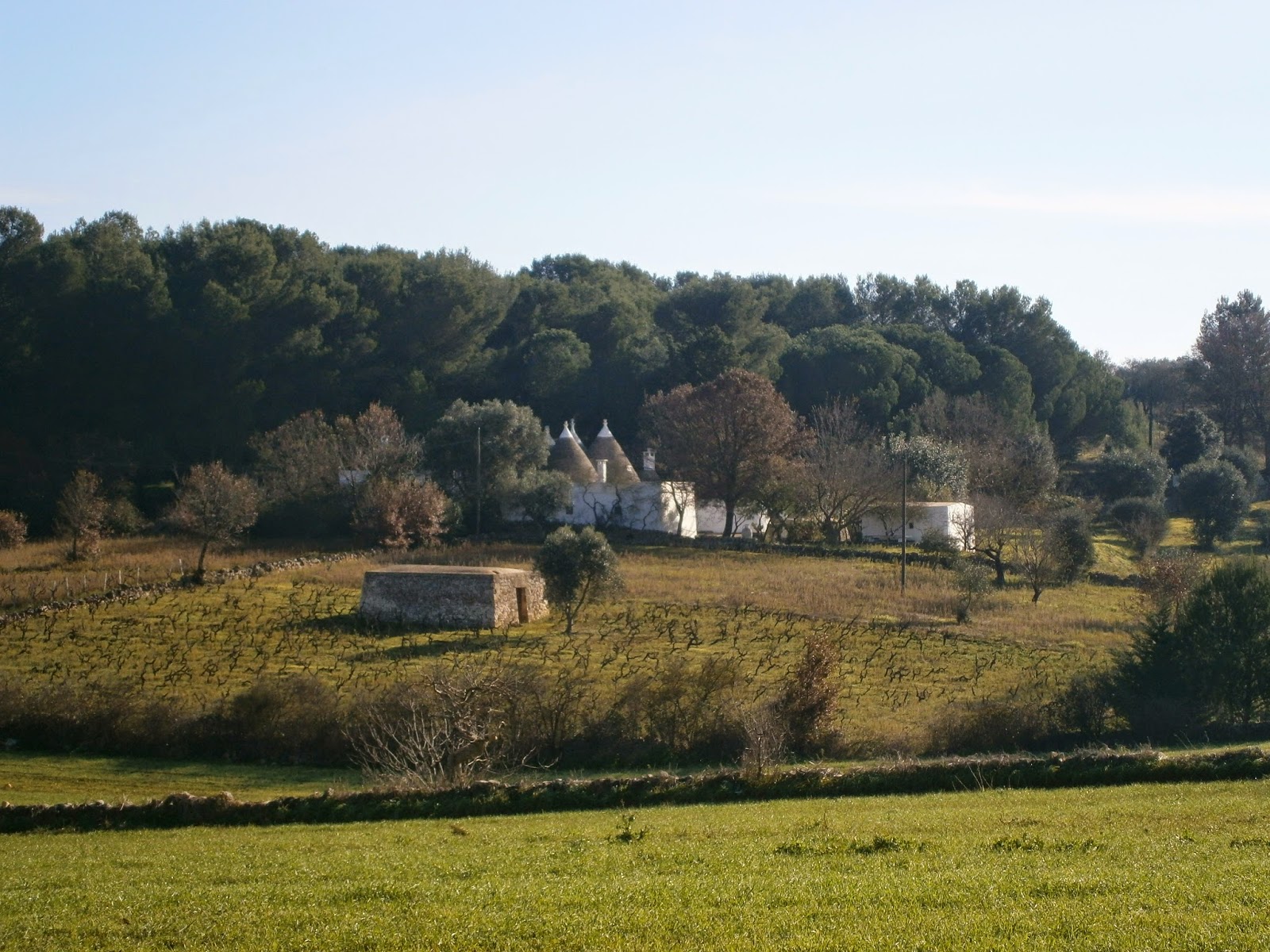
What is truly interesting about this area are the small dry
stone huts with conical roofs called trulli
(trullo in the singular). They can be
used as homes, storehouses, or just abandoned photogenic rubble.


Locorotondo is about the same size as Cisternino and just as charming. One tourist website says It "doesn't really have any specific tourist attractions; the town is the main sight". It was Sunday and people had just finished mass and were out with their families chatting in front of shops and letting their kids run and play in a small Christmas-themed park overlooking the valley. Walking among people and getting even just the briefest glimpse of what life is like is so much more memorable for me than when there are a gazillion sites to visit. Oh and the white wine they make nearby is divine.


The walk on the provincial road to Martina Franca (6km) wasn’t quite as beautiful
or as easy after a full lunch and bottle of wine, but we made it. It was very quiet on the streets though a few of the kiosks were open in the Christmas market. As it was Sunday, I imagine that everyone was tucked up at home after having had a giant Sunday family meal. We walked around a bit absorbing the quiet, taking in a requisite Prosecco at a "bar" and in the late afternoon, took a bus
back to Cisternino.
 |
| view of Locorotondo from Martina Franca |
All three of these hilltop towns have
white-washed stone buildings, narrow lanes, and large, well-cared for community squares. Wandering though the maze of the centro historico, you hear the metallic rumblings of dinner getting started, mothers shouting at their children, and the occasional news program. Women hung their wash and men carried bags of shopping from the butchers. And everywhere a faint smell of wood smoke and pine trees.
I’m
so glad we came at Christmas time. Not only was the weather perfect, the addition of the hanging lights over each
street and Santas climbing up the windows added a festive element to the trip.
 |
| main square Cisternino |
Like many small agricultural towns, Cisternino seemed to be populated more by older generations than younger. There were teens in their puffy dark coloured jackets and coifed hair, but for the most part, I saw middle-aged and elderly folks going about their daily routines. The nearest universities are 60 km away and the lack of youthful dissent may account for the pristine and preserved condition of the town. No calls for revolution or declarations of love marred the white walls of the town. One tiny cinema, one supermarket, and a handful of restaurants and shops. But the beauty, fresh air, and pace of life continue to resonate with me now that I'm home.
 |
| lovers' stroll in old town |

Every person we met in this area was friendly and appreciated
our feeble attempts to ask or say something in Italian. I don’t know if it’s
because it is a small town or that it was Christmas time, but there was such a
relaxed vibe in the area. Perhaps that’s why Cisternino was declared Cittaslow city
of 2014. Cittaslow is part of the Slow Movement trend, which encourages
towns/cities in Italy to slow down the pace of life and traffic, promote local
products, and oppose “cultural standardisation”.
 |
| these chaps were playing some kind of game |
MORE PICTURES. I took so many and it has been so difficult to choose which ones to post!
 |
| Welcome basket from Antonio. |
 |
| entrance to flat |
 |
| Farm |
 |
| on the path to Locorotondo |
 |
| trulli lovely |
 o o |
| lone olive tree |
 |
| Locortondo |
 |
| olive tree |
 |
| trulli in the country |
 |
| Martina Franca |
 |
| at night in Cisternino |
 |
| Cisternino |
 |
| small lane on a hill |
 |
| church |
 |
| house in old town |
 |
| Christmas! |
 |
| Cisternino |
 |
| cemetery outside of Cisternino |
 |
| bells! |
 |
| one of the piazzas in Cisternino |
 |
| the countryside |
 |
| Locorotondo |
 |
| Locorotondo |
 |
| Christmas market in Martina Franca |
 |
| Martina Franca |
 |
| main square Cisternino |


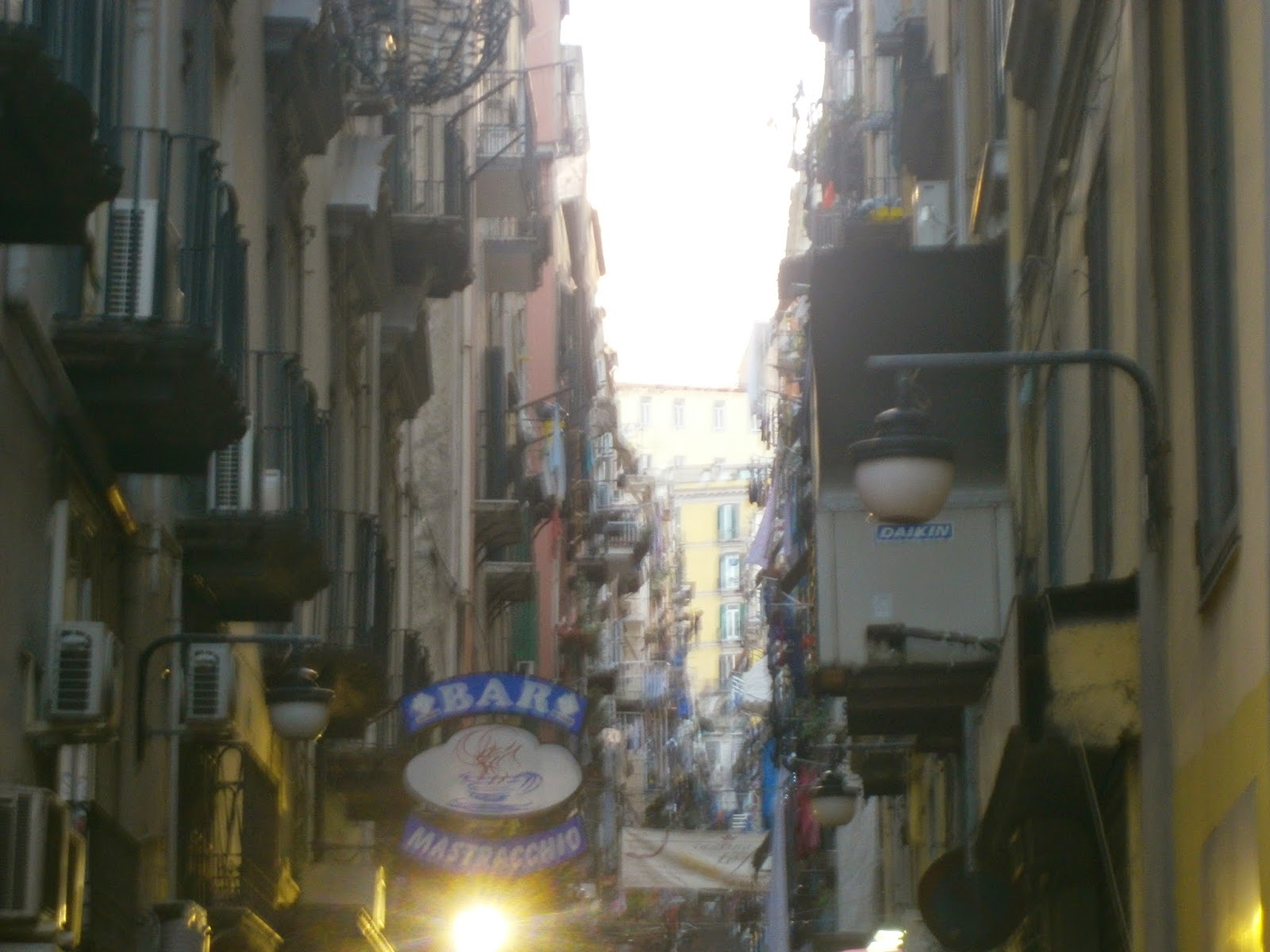


 This area is actually full of Christmas kitsch year round
but is over the top at Christmas time, full of mass produced and handmade props
for nativity scenes, football souvenirs, pastries, and culinary paraphernalia. Though
I had been warned by an Italian student about pickpockets in this area, it
seemed to be a safe place full of festive spirits.
This area is actually full of Christmas kitsch year round
but is over the top at Christmas time, full of mass produced and handmade props
for nativity scenes, football souvenirs, pastries, and culinary paraphernalia. Though
I had been warned by an Italian student about pickpockets in this area, it
seemed to be a safe place full of festive spirits. 
 This opera house was built in 1737 and for a while was the
largest in the world. Neapolitan opera was ground-breaking in the 19th
century. There was originally a secret passage to the Royal Palace next door. The
boxes were originally for the families closest to the royals. Each one has a
mirror so the king could see what people were up to from his central seat. For
the first few decades the theatre was more of a social event than a place of
music appreciation. People would have parties in their boxes and ignore the
performers or worse yet, throw food at them if they weren’t good enough. The lower
classes sat at the ground level and were apparently rowdy as well.
This opera house was built in 1737 and for a while was the
largest in the world. Neapolitan opera was ground-breaking in the 19th
century. There was originally a secret passage to the Royal Palace next door. The
boxes were originally for the families closest to the royals. Each one has a
mirror so the king could see what people were up to from his central seat. For
the first few decades the theatre was more of a social event than a place of
music appreciation. People would have parties in their boxes and ignore the
performers or worse yet, throw food at them if they weren’t good enough. The lower
classes sat at the ground level and were apparently rowdy as well.